Mods, Money, and the Market: What Your Upgrades Are Actually Worth When You Sell
Let's be real — nobody drops a few grand on a cold-air intake and a tune thinking about resale value. You do it because you want more power, a better sound, and that grin every time you bury the throttle. Totally valid. But here's the thing: eventually, most of us move on. A new platform catches your eye, life changes, or the build just runs its course. And when that day comes, the modifications you chose — and how you executed them — can mean the difference between a smooth sale and a listing that sits for six months with lowball offers.
We dug into the numbers and talked to people who live in the used performance car market every day. What they told us might change how you think about your next build.
The Cold Truth from the Dealer's Side
Used car dealers who specialize in performance vehicles have seen it all. Kenny Marsh, who runs a specialty pre-owned lot outside of Atlanta focused on sports cars and muscle, puts it bluntly: "Nine times out of ten, a heavily modified car is harder to sell than a stock one. The buyer pool shrinks immediately. You're not selling to everyone anymore — you're selling to one specific person who wants exactly what you built."
That's not always a bad thing. A well-executed, tastefully modified car can absolutely command a premium with the right buyer. But it's a numbers game. Fewer potential buyers means less competition, which means less upward pressure on price.
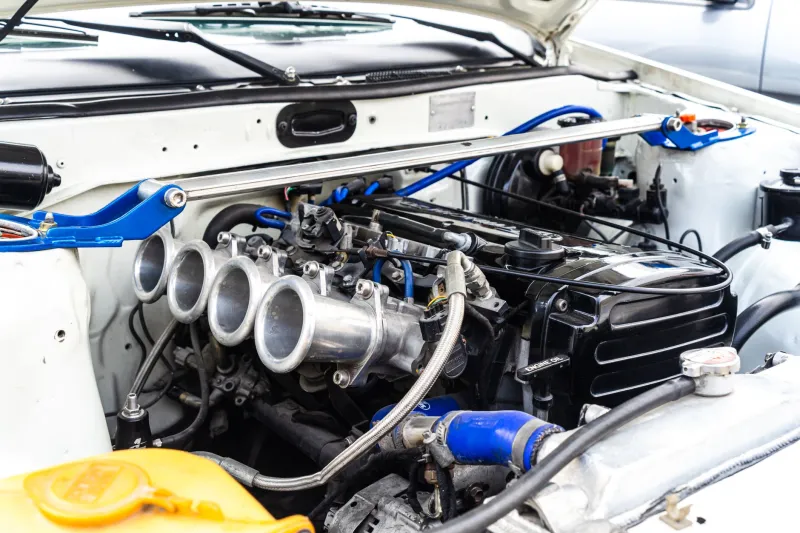
The modifications that tend to scare off buyers the most? Anything that touches reliability or creates uncertainty. Aggressive engine internals, high-boost turbo setups on platforms not known for handling them, and suspension work done by unknown shops are all red flags. "If I can't verify the work and I don't know who did it, I'm pricing that risk into my offer," Marsh says.
The Mods That Actually Hold — or Add — Value
Not all hope is lost for the modding faithful. Certain upgrades genuinely do move the needle in a positive direction at sale time, especially in collector and enthusiast circles.
Wheels and tires are consistently cited as one of the safest investments. A quality set of aftermarket wheels — think Volk, HRE, or BBS — on a car that originally shipped with underwhelming stockers can legitimately increase perceived value. The key word there is quality. Cheap knockoffs do the opposite.
Suspension upgrades from reputable brands — Bilstein, KW, Öhlins — on cars where enthusiasts expect them (think Mustangs, Camaros, WRXs, and track-focused imports) are often viewed favorably. Buyers who want these cars know what they're looking for, and a proper coilover setup with documentation can actually be a selling point.
Exhaust systems are a mixed bag. A catback from a well-known brand like Borla or Corsa on the right platform tends to be neutral-to-positive. But anything that deletes emissions equipment is an instant liability in states with strict smog laws — looking at you, California — and increasingly, buyers elsewhere are wary of the legal gray area.
ECU tunes from recognized shops with documented dyno sheets can add credibility, especially on turbocharged platforms where buyers expect the previous owner to have extracted more power. The documentation matters here. A tune with paperwork from a reputable tuner is a selling point. A tune with no records is a mystery — and mysteries don't command premiums.
What Collectors Actually Want
If you're playing in the collector car space — clean examples of first-gen Dodge Vipers, Fox Body Mustangs, early C5 or C6 Corvettes, early 2000s Pontiac GTOs — the calculus shifts dramatically. In many of these segments, originality is king.
Mark Deluca, an independent collector and occasional auction buyer based in the Chicago area, has a simple rule: "If it's not stock, I want to know exactly what was changed and I want it reversible. Preferably, I want the original parts in the trunk."
That philosophy is increasingly common among serious collectors. A numbers-matching muscle car with a period-correct restoration can be worth multiples of a modified counterpart. Even on modern collector-grade vehicles — low-mileage GT350s, Hellcat variants, ZL1s — factory stock examples consistently outperform modified ones at auction.
The exception? Factory-adjacent upgrades. Dealer-installed or factory-sanctioned performance packages, like Ford Performance or Chevrolet Performance parts, often retain value better because they carry an implied stamp of approval and don't void the original factory warranty paperwork.
The Documentation Factor
If there's one universal piece of advice that cuts across every segment of the used performance market, it's this: document everything. Receipts, invoices, dyno sheets, photos of the install — all of it matters when it's time to sell.
A buyer inheriting a modified car is taking on uncertainty. Your documentation is what converts that uncertainty into confidence. A build with a paper trail tells a story. A build without one raises questions. And buyers who have questions make lower offers — or walk away entirely.
Several market analysts who track platforms like Cars & Bids and Bring a Trailer note that well-documented builds with clear histories consistently outperform comparable cars with vague modification lists. "Transparency is currency in the enthusiast market," says one analyst who tracks auction results for a private investment group. "Show your work and you'll get paid for it."
Building Smart Without Killing the Fun
None of this means you should leave your car bone stock and never touch it. That's not what Pomp Fuel is about, and frankly, that's not what ownership is about either. The point is to go in with eyes open.
If you're building a dedicated track car or a long-term passion project you plan to drive forever, go nuts. Stroke that motor, slam it on coilovers, run a big turbo. Live your best life. But if there's any chance you'll want to recoup some of your investment down the road, think strategically. Choose quality over quantity. Document religiously. Keep the stock parts. And target modifications that enthusiasts in your specific platform community actually want.
The performance car market rewards passion — but it rewards smart passion even more. Do your homework, build with intention, and you might just find that the right buyer is out there ready to pay exactly what your vision is worth.