One Engine, Ten Problems: The Drivetrain Domino Effect That Kills Most Swaps Before They Hit the Road
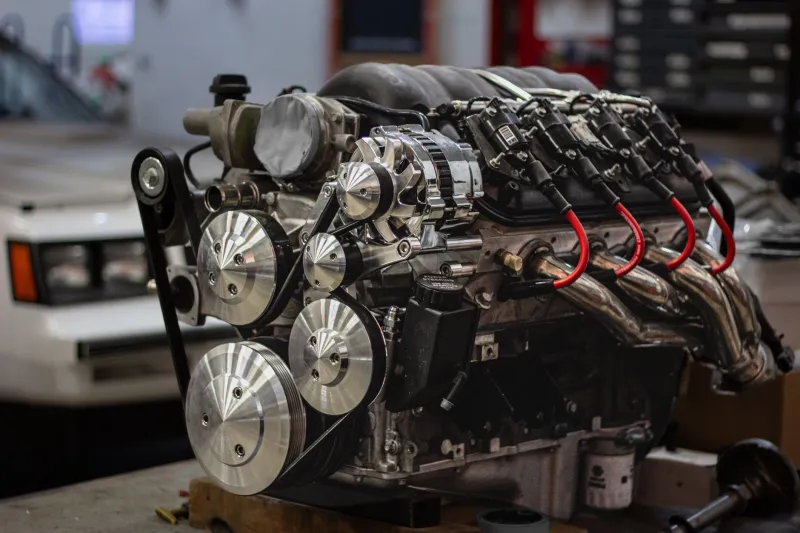
There's a moment in almost every ambitious engine swap where the builder posts a photo of that shiny new powerplant sitting in the engine bay, caption glowing with excitement, comments flooding in with fire emojis and fist bumps. It's a great moment. Genuinely. But experienced builders who've been around the block — and the dyno — will tell you that photo almost always comes before the real pain begins.
Because here's the thing nobody puts on a forum highlight reel: the engine is rarely the hard part. It's everything the engine talks to.
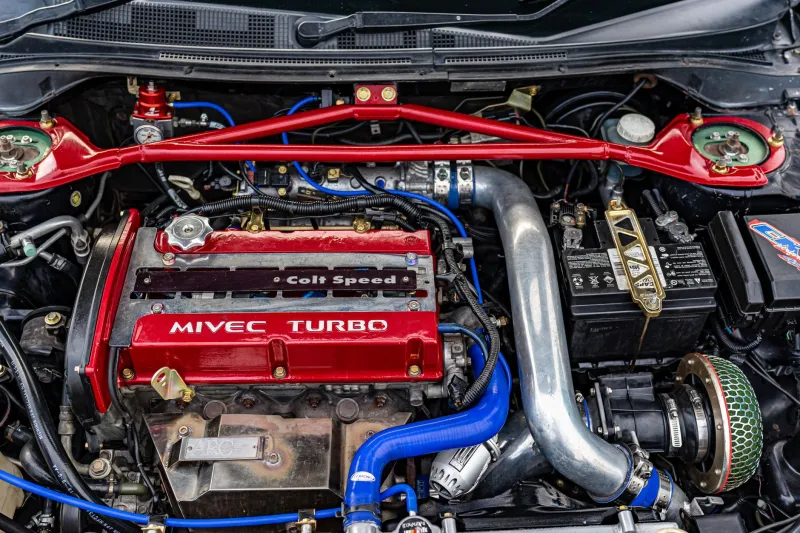
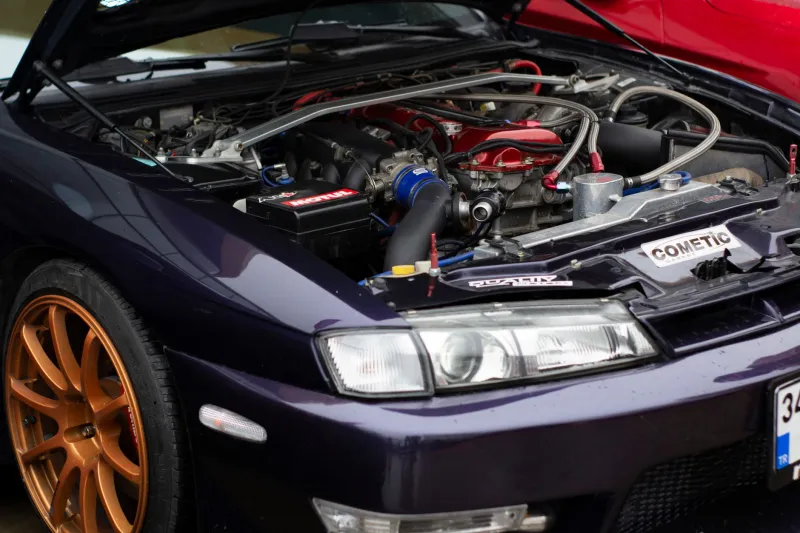
If you're planning a serious power upgrade — we're talking swapping a high-displacement or forced-induction mill into a chassis originally engineered for a fraction of that output — you're not just buying a new engine. You're signing up to rethink nearly every rotating component in the car. Ignore that reality, and the build doesn't just stall. It can cost you double, triple, or more than your original budget before you ever make a single pass.
The Weak Link Isn't Where You Think
Most builders walk into a swap with a clear vision: get the engine in, sort the mounts and cooling, tune it up, go fast. Clean plan. Terrible math.
What that plan leaves out is the entire mechanical conversation happening downstream of the flywheel. Every torque figure your new engine produces has to travel somewhere — through the clutch or torque converter, into the transmission, down the driveshaft, through the differential, and out to the axles and wheels. Each one of those components was engineered around a specific torque threshold. The moment you blow past that threshold with a bigger engine, you're running on borrowed time.
The clutch usually speaks first. A factory unit rated for 300 lb-ft of torque doesn't politely handle 550. It slips, glazes, and eventually grenades — sometimes dramatically, sometimes slowly and expensively. Upgrading to a performance clutch is table stakes at this point, but even that's just the beginning of the conversation.
Transmissions: The Component Everyone Hopes Will Just Work
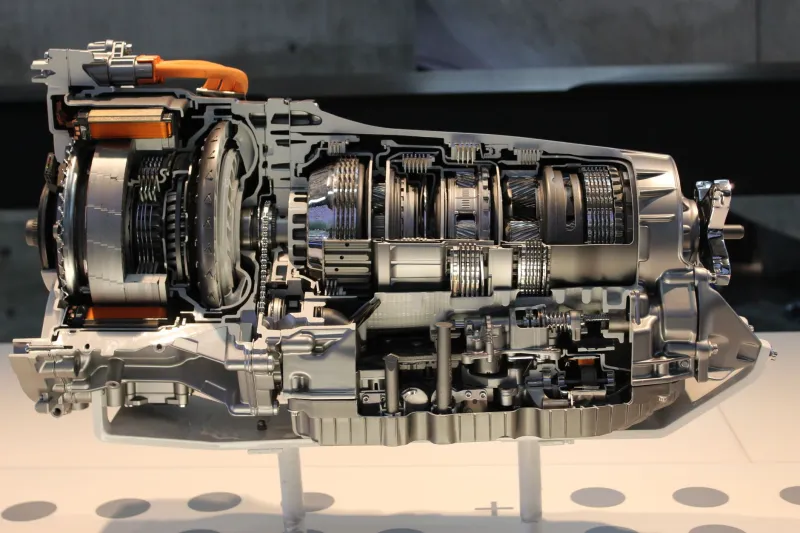
Here's where budgets really start bleeding. A lot of builders — especially those doing their first serious swap — will try to retain the factory transmission because it physically bolts up and the adapter situation seems manageable. Sometimes it works short-term. Often it doesn't.
Stock gearboxes have gear sets, synchronizers, and cases built to tolerate a specific torque range. Push a built LS or a turbocharged four-cylinder making three times the original power through a transmission that was never designed for it, and you're essentially stress-testing it to destruction with every launch. You might get a season out of it. You might get a quarter mile.
The fix — a purpose-built or heavy-duty replacement transmission — isn't cheap. Depending on the platform and power level, you're looking at anywhere from $2,500 to well north of $10,000 installed for a unit that can actually handle the job. And that's before you address what comes after it.
Driveshafts, Differentials, and the Real Money Pit
Let's say you've sorted the engine, the clutch, and the transmission. You're feeling good. Then you put the car under load and the driveshaft starts vibrating like a tuning fork at 60 mph. Or worse — it lets go entirely, which is as dangerous as it sounds.
Factory driveshafts are balanced and rated for factory power. A high-torque swap can push one-piece shafts past their rotational limits, especially if the swap changes the driveshaft angle. Custom driveshafts — aluminum, carbon fiber, or properly spec'd steel units — become mandatory, not optional. Budget another $500 to $2,000 depending on the application.
And then there's the differential. This is where builders who thought they were almost done get absolutely humbled. Open diffs and even some limited-slip units were engineered with specific torque loads in mind. Ring and pinion gears have ratings. Axle shafts have ratings. Exceed them consistently and you'll be pulling apart a rear end that was never meant to see that kind of abuse.
Replacing or rebuilding a differential with upgraded internals — stronger ring and pinion, a performance limited-slip or locker, and properly rated axle shafts — can run $1,500 to $5,000 or more depending on how exotic the setup needs to be. On some platforms, a full rear end swap from a higher-spec model is actually the cleaner, cheaper solution. But that's its own research rabbit hole.
Real Builds, Real Lessons
Talk to anyone who's done a serious swap — an LS into a Miata, a 2JZ into an S-body Nissan, a Coyote into a Fox-body — and the story almost always follows the same arc. The engine cost X. The transmission cost 1.5X. The rear end cost another X. The custom driveshaft, the axle upgrades, the subframe reinforcement, the cooling rework — all of it adds up to a number that would have made them pause had they seen it on day one.
That's not a knock on those builds. Some of the most legendary machines in American car culture came from exactly that kind of obsessive, iterative problem-solving. But the builders who came out the other side with great cars — and their sanity — were the ones who planned for the full drivetrain picture from the start rather than discovering it one failure at a time.
How to Actually Plan a Swap Without Getting Crushed
The move here isn't to scare you off. Engine swaps are some of the most rewarding projects in the hobby. But going in with eyes open makes all the difference.
Start by researching what drivetrain components the donor vehicle uses at your target power level. If a factory version of that engine lives in a car with a specific transmission and rear end, those are your baseline targets. From there, figure out what your platform's factory components can handle and where the gaps are.
Budget for the whole drivetrain, not just the engine. A rough rule of thumb: if the engine costs $5,000, expect to spend at least that again — and possibly twice as much — sorting everything it connects to. The actual number depends heavily on the platform and power goals, but building in that buffer prevents the gut-punch moments that derail projects mid-build.
And connect with builders who've done the exact swap you're planning. The community knowledge around popular swaps is genuinely invaluable. Someone has already made the mistakes you're about to make — and most of them are happy to save you the tuition.
The Swap Is the Journey
At the end of the day, a properly executed engine swap — one where the entire drivetrain has been thought through and built to match — produces something no factory ever will: a car that's exactly yours. Engineered to your spec, your power goals, your driving style.
Just go in knowing that the engine is the headline, but the drivetrain is the whole story. Respect the cascade, plan for it, and the build you end up with will be worth every dollar and every late night in the garage.