Breathe Easy, Go Fast: The Underrated Power of Exhaust Header and Manifold Upgrades
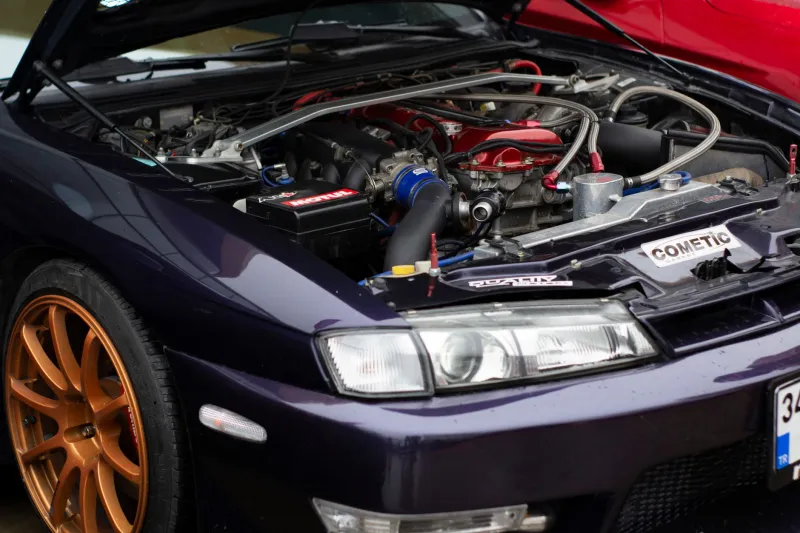
Every gearhead has a list. Intake, tune, suspension, forced induction — the usual suspects line up like a menu at a performance shop. But tucked somewhere near the bottom, often skipped in favor of flashier mods, sits one of the most mechanically elegant upgrades you can bolt onto a car: the exhaust header. It's not glamorous. Nobody's posting manifold photos to Instagram. But if you care about what's actually happening inside your engine, this one deserves a serious look.
What Your Factory Manifold Is Actually Doing to You
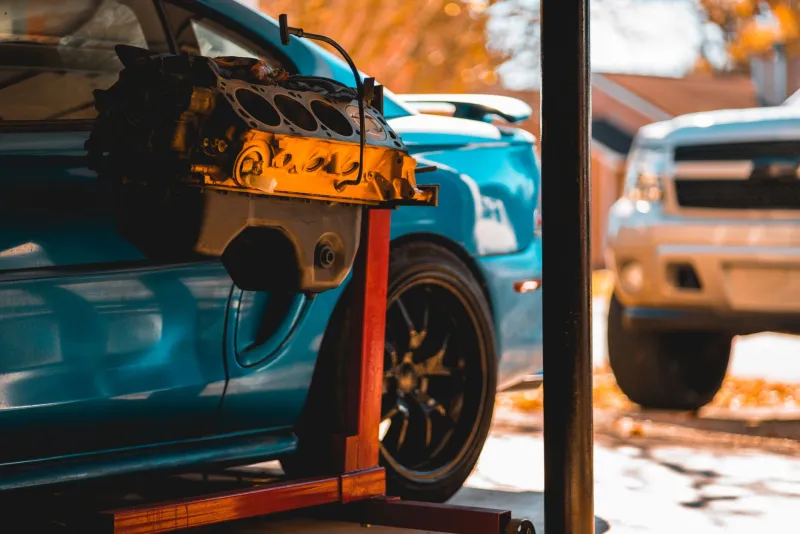
Stock cast-iron exhaust manifolds are designed with one primary goal — cost. Automakers need a part that's cheap to produce, durable enough to last the warranty period, and simple enough to package into a tight engine bay alongside everything else. Performance is a distant afterthought.
The result is a chunky, restrictive hunk of metal that forces exhaust gases from multiple cylinders into a cramped, turbulent collector. When your engine fires, it needs to push spent gases out of the cylinder as quickly and cleanly as possible to make room for the next fresh charge of air and fuel. A restrictive manifold slows that process down, leaving residual exhaust gas in the cylinder and robbing you of power on the next combustion cycle. That's backpressure, and it's the enemy of performance.
Here's the kicker: this isn't a marginal issue. On many naturally aspirated engines, a factory manifold can be responsible for a measurable loss of volumetric efficiency across the entire RPM range. You're leaving power on the table every single time you put your foot down.
The Physics Behind the Gains
Performance headers work on a principle called exhaust scavenging, and once you understand it, you'll never look at a cast-iron log manifold the same way again.
When an exhaust valve opens, a pressure wave travels down the exhaust pipe. If the pipe is tuned to the right length, that wave reflects back as a low-pressure pulse that arrives at the exhaust valve just before it closes. That negative pressure literally helps pull exhaust gases out of the cylinder — and if the timing is right, it can even begin drawing in the next intake charge. It's essentially free assistance from the physics of fluid dynamics, and headers are engineered to exploit it.
Long-tube headers maximize this effect at lower RPMs by using longer primary pipes, which is why they're the go-to choice for drag builds and street performance cars that spend most of their time below 6,000 RPM. Short-tube headers — often called shorties — are a more practical option for daily drivers where ground clearance and emissions compliance matter, and they still deliver real improvements over a stock manifold, particularly in the mid-to-high RPM range.
Equal-length headers take the concept further by ensuring every cylinder's primary pipe is the same length, so each exhaust pulse arrives at the collector with identical timing. This is why you see them on serious track builds and why engine builders obsess over collector design. It's not just about flow — it's about timing.
What the Dyno Actually Shows
Skeptics love to dismiss header upgrades as marginal, but the dyno numbers tell a different story. On a naturally aspirated V8 — think a 5.0 Coyote in a Mustang GT or an LS-swapped project car — a quality set of long-tube headers can net anywhere from 20 to 40 wheel horsepower when paired with the rest of a proper exhaust system. On smaller displacement four-cylinders, the percentage gains can be even more impressive relative to the base output.
Combine headers with a cat-back exhaust and a tune to recalibrate fuel trims and ignition timing, and you've got a system that's working together instead of fighting itself. That's where the real magic happens. Headers alone are a solid upgrade. Headers as part of a breathing package? That's a completely different conversation.
Turbocharged applications are their own animal. On a boosted setup, the goal shifts from scavenging to minimizing restriction before the turbo, and equal-length tubular manifolds play a huge role in spool time and boost response. It's one reason why the aftermarket turbo manifold business is booming — builders who've figured out that a well-designed manifold can shave valuable milliseconds off spool time aren't going back to cast iron.
Killing the Myths
Let's address the two biggest excuses people use to skip this upgrade.
"Backpressure is good for torque." This one refuses to die, and it needs to. The idea that engines need backpressure to make low-end torque is a myth rooted in a misunderstanding of how two-stroke engines work. Four-stroke engines — which is what's in your car — benefit from reduced backpressure across the board. What you might lose with an overly aggressive exhaust setup is scavenging efficiency at low RPM, but that's a tuning issue, not a backpressure issue. A properly designed header system doesn't hurt low-end torque; it improves the entire curve.
"It's not worth it if I'm not going to the track." If you drive a performance car on public roads, you feel throttle response, mid-range pull, and highway passing power every single time you drive. A header upgrade improves all three. The track isn't a prerequisite for caring about how your engine breathes.
Picking the Right Setup for Your Build
Not every header is right for every application. Here's a quick framework:
- Daily driver with mild mods: Shorty headers keep you emissions-legal in most states and deliver real gains without the installation headaches of long-tubes.
- Street/strip build: Long-tube headers with high-flow cats are the sweet spot — serious power gains with manageable emissions compliance.
- Track-only car: Full-length equal-length headers, no cats, maximum flow. Don't overthink it.
- Turbo build: A custom or quality aftermarket turbo manifold is one of the first things on the list. Spool time and heat management are the priorities here.
Installation is where a lot of people get cold feet, and honestly, it's not a beginner job. Header bolts snap, heat shields are a puzzle, and on some platforms the labor hours add up fast. Budget for a professional install if you're not confident, because a leaking header gasket or an overtorqued stud is worse than the stock manifold you started with.
The Bottom Line
The exhaust manifold doesn't get the hype it deserves, but that's partly what makes it such a smart play. While everyone else is chasing the next big bolt-on, you can be extracting real, measurable power from a mod that's been proven on dynos and race tracks for decades. Your engine wants to breathe. Give it room, and it'll reward you every time you hit the throttle.