Fine Print and Full Throttle: What Your Dealer Won't Tell You About Warranty Coverage on Modified Cars
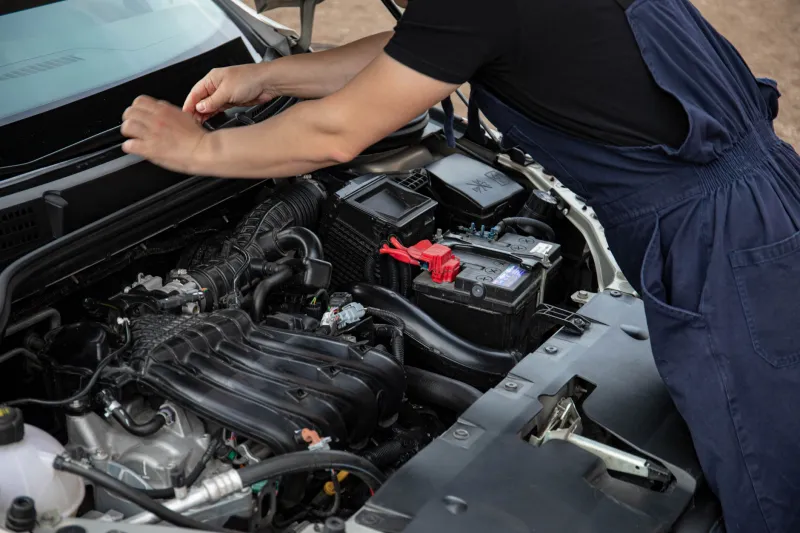
There's a moment every enthusiast dreads. You've spent months building your car into something genuinely exciting—tune, intake, coilovers, maybe a catback—and then something goes sideways on a component you never touched. You roll into the dealership expecting a routine warranty fix and the service advisor comes back with that look. You know the look. The one that says we're not covering this.
But here's the thing: they might not actually have that power.
The Magnuson-Moss Act: The Law Your Dealer Hopes You Don't Know About
Passed back in 1975, the Magnuson-Moss Warranty Act is the federal legislation that governs how manufacturers handle consumer product warranties in the United States. And it contains a provision that every single modified car owner should have tattooed somewhere useful.
Under Magnuson-Moss, a manufacturer cannot void your entire warranty simply because you've added an aftermarket part. They have to prove that the aftermarket modification directly caused the failure in question. A dealer denying your transmission warranty claim because you installed a short-throw shifter? That's a stretch that doesn't hold up legally. Denying your engine warranty because you've got a tune and a spun bearing? That's a much harder argument for you to win.
The key phrase the FTC uses is "caused by." The burden of proof sits with the manufacturer, not with you.
What Actually Happens at the Dealer Level
Let's be real: the law and what actually plays out at your local Chevrolet or Ford store can be two very different things. We dug into forums across the enthusiast community—from Camaro6 to Mustang6G to SVTPerformance—and the stories are all over the map.
One GT500 owner in Texas reported that his dealer denied a supercharger bearing replacement after finding a tune on his car, even though the tune had nothing to do with the supercharger failure. He pushed back, cited Magnuson-Moss, and eventually got the work covered—but it took three weeks, two phone calls to Ford corporate, and a formal written dispute.
On the flip side, a WRX owner in Colorado said his dealer didn't even blink at his aftermarket intake when he came in for a head gasket replacement. "They pulled the car in, fixed it, and sent me on my way," he posted. "Never even mentioned the mods."
The difference? Dealer culture, service advisor discretion, and frankly, how busy the service department is. Some dealers are actively looking for reasons to deny claims. Others just want to move cars through the bay.
The Gray Zone: Mods That Actually Do Create Problems
Let's not pretend this is all black and white. There are modifications that genuinely complicate warranty situations, and being honest about that matters.
Aggressive ECU tunes that push boost, timing, and fuel delivery beyond factory tolerances are legitimately connected to engine wear. If you're running 500 whp on a platform that left the factory at 300, and you snap a connecting rod, that's a tough warranty fight. A lawyer we spoke with—who handles consumer protection cases in California—put it plainly: "If there's a clear causal chain between the modification and the failure, you're in difficult territory. But dealers often try to draw that chain when it doesn't actually exist."
Suspension modifications that alter geometry can create liability questions around steering and handling components. Brake upgrades, interestingly, are rarely used as warranty denial leverage because improved brakes are hard to frame as damaging.
The mods most commonly weaponized by dealers? Tunes. Every time. Because they're easy to detect with a scan tool and they're easy to point at.
State-by-State: Where Consumer Law Has Your Back
Beyond federal protections, individual states layer on additional consumer rights that can shift the balance in your favor.
California leads the pack, as usual. The California Lemon Law and the state's Unfair Competition Law give consumers strong grounds to challenge warranty denials that can't be substantiated. California dealers know this and tend to be more careful.
Texas has a robust Deceptive Trade Practices Act that attorneys regularly use to challenge bad-faith warranty denials. The threat of treble damages tends to get manufacturer attention fast.
Florida and New York both have consumer protection frameworks that require manufacturers to demonstrate causation before denying coverage—essentially mirroring Magnuson-Moss at the state level with additional enforcement teeth.
States like Montana, Wyoming, and parts of the rural South have thinner consumer protection frameworks, meaning dealers there operate with more practical latitude even if the federal law technically applies everywhere.
How to Protect Yourself Before You Ever Walk Into a Service Bay
The enthusiast community has developed some genuinely smart practices for navigating this landscape.
First, document everything. Keep receipts, installation records, and dyno sheets. If your modification was installed professionally, get a written invoice that describes the work. This establishes a paper trail showing your mods are legitimate and properly executed.
Second, know your car's OBD history. Some manufacturers timestamp ECU flashes and can tell when a tune was loaded. If you're running a tune and need warranty work on an unrelated component, be prepared for that conversation.
Third, consider a tune solution that's returnable to stock. Several popular tuning platforms—including those used widely in the Ford and GM ecosystems—allow you to reflash to factory calibration before service visits. Is that gaming the system? Maybe. Is it legal? Absolutely.
Finally, if a dealer denies your claim and you believe it's unjustified, don't just pay the bill. File a complaint with the FTC, contact your state attorney general's consumer protection office, and if the dollar amount warrants it, consult an attorney. The threat of regulatory attention changes dealer behavior quickly.
The Bottom Line
Modifying your car doesn't automatically hand your warranty over to the dealer. The law is more on your side than the service advisor's clipboard suggests. But knowing your rights and actually using them are two different skills—and in this game, the prepared enthusiast wins.