Chasing Numbers: The Honest Math Behind Diminishing Returns in Performance Builds
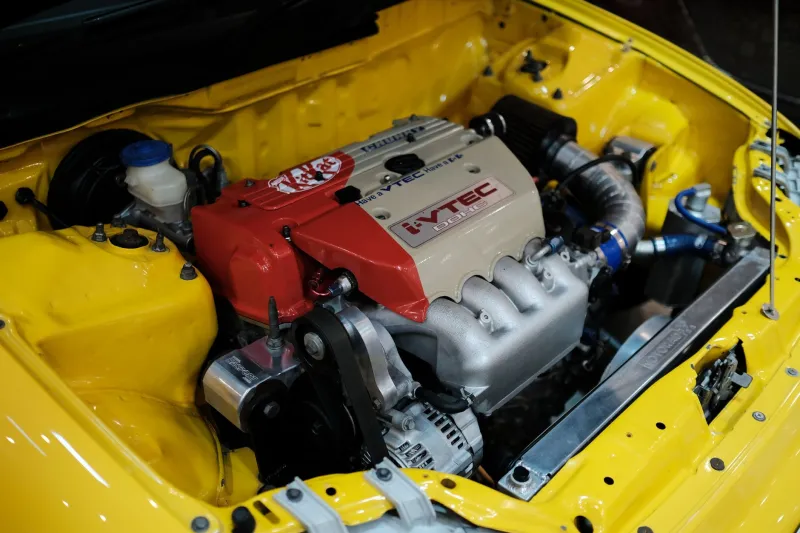
Somewhere between your first bolt-on intake and your third turbo upgrade, something shifts. The gains get smaller. The invoices get bigger. The gap between what you're spending and what you're actually feeling starts to feel like a canyon. Welcome to the horsepower plateau—the place where enthusiasm meets physics, and physics usually wins.
This isn't a story about giving up. It's a story about being smarter than the guy who just dropped $8,000 chasing 40 horsepower on a platform that was already at its limit. Understanding diminishing returns might be the most valuable thing a serious gearhead can internalize.
The Early Gains Are Real—and Intoxicating
Let's be honest about why this conversation is hard to have. Early in a build, the returns are phenomenal. A cold-air intake, a tune, an upgraded exhaust—on the right platform, you can net 30 to 50 horsepower for under $1,500. That's somewhere in the neighborhood of $30 to $50 per horsepower. That math feels incredible, and it should, because it genuinely is.
Those early mods work because factory vehicles are tuned conservatively. Emissions compliance, warranty liability, fuel economy ratings, and broad market appeal all conspire to leave meaningful performance on the table. Aftermarket parts and a proper ECU tune essentially unlock what the platform was already capable of delivering. You're not so much adding power as you are recovering it.
But here's the catch: that well runs dry faster than most people expect.
Where the Curve Bends
Once you've exhausted the low-hanging fruit—bolt-ons, tune, maybe a downpipe or catback—the cost-per-horsepower number starts climbing steeply. On a turbocharged platform, for example, upgrading to a larger turbo might add 80 horsepower but require new injectors, upgraded fuel pump, intercooler, supporting cooling system work, and a full custom tune. You're now looking at $4,000 to $6,000 for those 80 horses. That's $50 to $75 per horsepower—already noticeably worse than your early mods.
Push further and the numbers get uglier fast. Chasing the last 50 horsepower on a platform that's approaching its engineering ceiling might require forged internals, a built transmission, upgraded axles, and extensive tuning time. Easily $10,000 to $15,000 or more. You're now paying $200 to $300 per horsepower for gains that, on the street, are functionally imperceptible compared to what you already had.
The curve doesn't just bend—it doubles back on you.
Platform Limits Are the Real Ceiling
Every vehicle has a structural ceiling, and it's not always where you think it is. Sometimes it's the engine block itself—cast iron pistons and stock rods have finite limits before catastrophic failure becomes a real possibility. More often, it's the transmission. Factory gearboxes on popular sport compact platforms are notorious for becoming the weak link once power climbs past a certain threshold. You can build a 600-horsepower engine, but if your transmission is rated for 400, you've built an expensive grenade.
Drivetrain components—axles, differentials, half-shafts—follow the same logic. And the chassis itself has limits. A unibody that wasn't engineered for track use will flex and twist under hard cornering loads in ways that no amount of horsepower can compensate for. At some point, you're not building a faster car. You're just building a more expensive one.
Knowing your platform's actual ceiling—not the internet forum ceiling, the real one—requires research. Owner communities, dedicated forums, and reputable tuners who specialize in your specific vehicle are invaluable. A shop that has built 50 versions of your exact platform will tell you exactly where the wall is, and that knowledge is worth paying for.
The Framework for Knowing When to Stop
So how do you actually identify your sweet spot? A few honest questions will get you there.
What is this car actually used for? If the answer is street driving with occasional track days, 400 to 500 horsepower on most platforms is already more than you can consistently deploy. Chasing 600 or 700 is a numbers game, not a driving improvement.
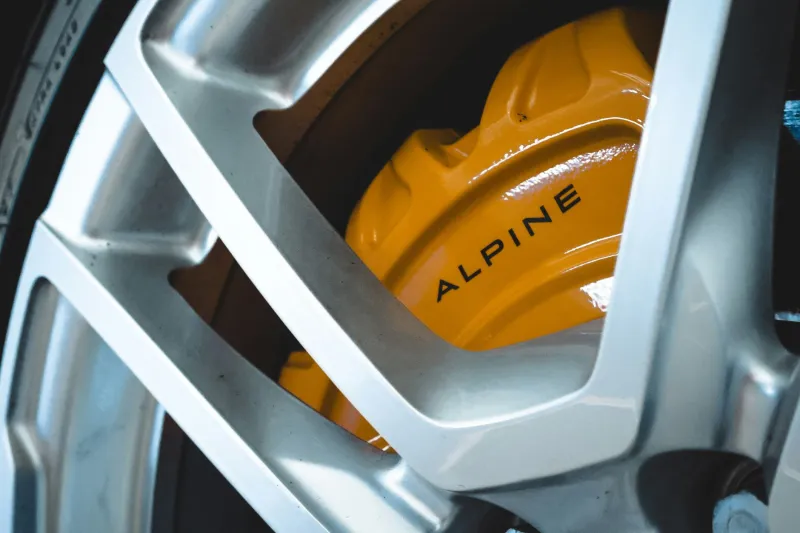
What does the rest of the car look like? Horsepower without matching suspension, brakes, and tires is just danger with a dyno sheet attached. If your chassis can't exploit the power you have, adding more is irrational.
What's the cost of the next tier? Map out what it would actually cost—parts, labor, tune, supporting mods—to reach the next meaningful power milestone. Then ask yourself honestly whether that money would improve your experience more than other investments. A set of quality coilovers and a wheel alignment might transform how your car drives at the power level you already have.
What happens if something breaks? At high power levels on a built platform, failures are more severe and more expensive. Factor in the risk-adjusted cost of a blown engine or transmission, not just the cost of the parts you're adding.
The Smartest Builds Know When to Pivot
Some of the most satisfying, fastest-feeling cars in any enthusiast community aren't the ones with the biggest numbers on the dyno sheet. They're the ones where every system is in balance—where the power matches the suspension, the suspension matches the brakes, the brakes match the tires, and the driver can actually exploit all of it.
There's no shame in reaching your platform's sweet spot and deciding to stay there. In fact, it's the move that separates builders who are chasing a feeling from builders who are chasing a number. The feeling is what this is all about. And sometimes the smartest thing you can do with your next mod budget is spend it somewhere other than the engine.