Rubber Economics: How the Wrong Tire Choice Quietly Drains Your Performance Budget

Tires are the most important performance component on your car. Full stop. Every horsepower you've built, every suspension dollar you've spent, every brake upgrade you've bolted on—all of it communicates to the road through roughly the size of a sheet of printer paper per corner. And yet, tire selection is where a shocking number of enthusiasts cut corners, make emotional decisions, or simply follow the crowd without running the actual numbers.
That's expensive. Let's fix it.
The Compound Spectrum: What You're Actually Choosing Between
The performance tire market in 2024 breaks down into a few meaningful categories, and understanding where each lives is the foundation of smart tire strategy.
Ultra-high-performance summer tires are the sweet spot for most serious street enthusiasts. Compounds like the Michelin Pilot Sport 4S, Continental ExtremeContact Sport 02, and Bridgestone Potenza Sport offer exceptional dry and wet grip, reasonable tread life for the performance level, and street manners that make them genuinely livable day to day. These are the tires that make your car feel like it was engineered by someone who cared.
All-season performance tires split the difference between year-round capability and spirited driving. Options like the Michelin Pilot Sport All Season 4 and Continental ExtremeContact DWS06+ are genuinely impressive for what they are—capable in light snow, confident in wet conditions, and reasonably engaging in dry weather. But they compromise grip at the limit compared to a dedicated summer compound, and that compromise has a real cost in driving satisfaction and lap times.
Track-focused and semi-slick compounds—Michelin Pilot Sport Cup 2, Yokohama ADVAN A052, Falken Azenis RT660—exist at the far end of the spectrum. These tires deliver stunning levels of mechanical grip and are the choice for autocross competitors and track-day regulars who want every tenth. They also wear at a rate that will make your credit card weep.
The Cost-Per-Mile Reality Check
Here's where the math gets interesting—and where a lot of enthusiasts get surprised.
A set of Michelin Pilot Sport Cup 2s in a common fitment, say 255/35R19 fronts and 285/30R19 rears, might run $1,200 to $1,600 mounted and balanced. If you're driving that car primarily on the street with occasional track days, expect 10,000 to 15,000 miles of tread life if you're lucky. You're looking at roughly $0.10 to $0.16 per mile in tire cost alone.
Compare that to a set of Michelin Pilot Sport 4S in the same size—maybe $1,000 to $1,300 installed, with 20,000 to 30,000 miles of street life. You're now at $0.04 to $0.06 per mile. That's a meaningful difference over the life of a build, particularly if you're replacing tires every year or two.
Now consider the enthusiast who goes the other direction—opting for a budget-tier performance tire to save $200 upfront. If that tire wears 30% faster, handles wet roads poorly enough to be a safety concern, and degrades in grip consistency after the first 50% of its tread life, the value proposition evaporates quickly. The cheapest tire at the point of purchase often isn't the cheapest tire over its service life.
Matching Compound to Reality
The most common tire mistake isn't buying the wrong brand—it's buying the wrong category for your actual driving habits. Be honest with yourself here, because the market is full of people running track tires on cars that never see a track, and all-seasons on cars that deserve much better.
If you live in the Sunbelt—Texas, Florida, Arizona, Southern California—and your car isn't a dedicated winter/summer swap situation, a premium UHP summer tire is almost certainly your best value. You get maximum performance for your conditions, solid tread life, and you're not paying for winter capability you'll never use.
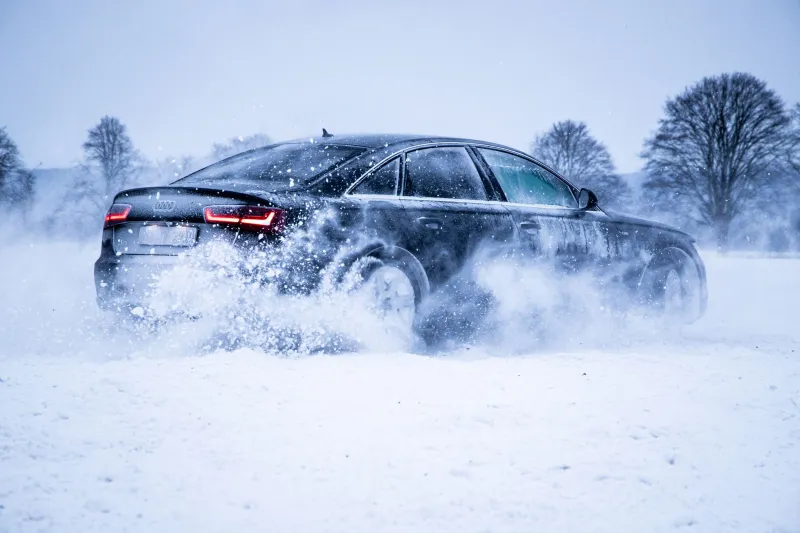
If you're in the Midwest, the Northeast, or the Pacific Northwest where winter driving is a real consideration, the math changes. Running a dedicated summer tire year-round in Chicago or Minneapolis isn't brave—it's reckless. A proper seasonal swap, with a set of all-season or dedicated winter tires for the cold months, protects your performance rubber from cold-weather degradation (most summer compounds get dangerously stiff below 45°F) and extends the life of your summer set significantly. The upfront cost of two sets of tires is offset by the extended service life of each.
For the track-day crowd, the calculus is different again. If you're doing more than three or four track events a year, a dedicated track tire makes sense—but budget for it accordingly and don't let those tires anywhere near a daily driving situation. The wear rate will shock you.
What the Tire Manufacturers Don't Advertise
Tread wear ratings (UTQG) are a useful starting point but notoriously inconsistent across manufacturers. A 300 treadwear rating from one brand may last significantly longer than a 300 from another, because each manufacturer sets its own baseline. Real-world owner data—from forums, track communities, and independent testing outlets—is far more reliable than the number on the sidewall.
Temperature ratings and traction grades matter too, particularly if you're running a car in performance applications. A tire with a lower temperature grade will overheat faster under sustained hard use, which degrades grip and accelerates wear in exactly the conditions where you're asking the most of it.
The Bottom Line on Rubber
Tire strategy isn't glamorous. You can't post a photo of your tire compound choice and get a thousand likes. But the difference between a thoughtful tire decision and a lazy one shows up every single time you drive—in confidence, in lap times, in the long-term cost of keeping your build on the road.
Buy the right tire for how you actually drive, not how you imagine you drive. Run the cost-per-mile numbers before you assume the cheaper option is saving you money. And remember: every single thing your car does happens through those four contact patches. They deserve as much attention as anything else in your build.