Sticker Shock in the Policy: The Real Cost of Insuring a Performance Car and How to Stop Overpaying

Sticker Shock in the Policy: The Real Cost of Insuring a Performance Car and How to Cost Stop Overpaying
You did the math. You figured out the payment, budgeted for premium fuel, set aside money for tires, and felt pretty good about where you landed. Then you called your insurance agent about that Shelby GT500 or Porsche 911 Carrera S, and suddenly the numbers stopped making sense. Welcome to the part of performance car ownership that nobody puts in the brochure.
Insurance for high-performance vehicles is a genuinely different world than insuring a daily commuter, and the gaps between what you assume you're covered for and what your policy actually protects are wide enough to drive a semi through. Let's break down exactly what you're dealing with — and more importantly, how to handle it.
Why Performance Cars Cost So Much More to Insure
Insurance companies aren't doing this to punish enthusiasts (even though it can feel that way). They're doing it because the actuarial data is real. High-performance vehicles statistically get into more accidents, sustain more severe damage when they do, and cost significantly more to repair. A fender bender in a Corvette Z06 isn't a $1,500 job — it's a $12,000 carbon fiber replacement nightmare.
Beyond the crash math, theft is a major factor. Certain performance cars, particularly European exotics and modified JDM vehicles, are disproportionately targeted. Dodge Challengers and Chargers have made headlines for theft rings operating at industrial scale. Insurers know this and price accordingly.
Horsepower ratings, vehicle classifications, and even the zip code where you garage the car all feed into the algorithm. A 700-horsepower vehicle garaged in a dense urban area with a young male driver is basically the insurance industry's nightmare client, and the premium reflects that reality.
The Modification Coverage Gap Nobody Warns You About
Here's where a lot of performance car owners get genuinely blindsided: standard auto insurance policies typically do not cover aftermarket modifications. Read that again.
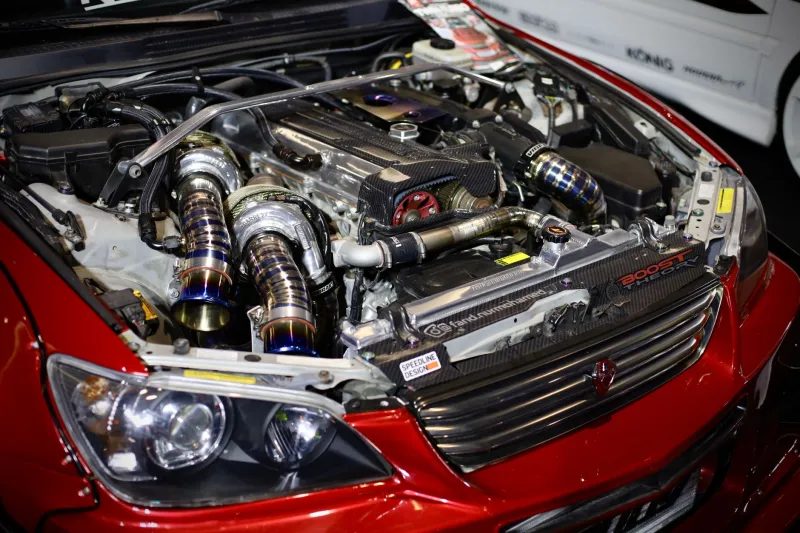
If you've spent $8,000 on a supercharger kit, upgraded brakes, coilovers, and a custom exhaust, and your car gets totaled or stolen, your standard policy is almost certainly going to pay out the stock vehicle value only. Your modifications are gone. No reimbursement, no acknowledgment that they existed.
Some insurers offer modification riders — add-on coverage that extends protection to aftermarket parts up to a specified dollar amount. These are worth their weight in gold if you've invested heavily in your build. You'll need to document everything: receipts, photos, installation records. The more thorough your documentation, the smoother a claim goes.
Other insurers simply won't touch heavily modified vehicles. If you've done an engine swap, significant suspension work, or anything that materially changes the vehicle's performance characteristics, some standard carriers will void your coverage entirely if they find out — even for unrelated claims. Yes, that's as bad as it sounds.
Track Days: The Coverage Black Hole
You signed up for a HPDE (High-Performance Driver Education) event at your local circuit. You've got a helmet, your car is inspected, and you're ready to learn the limits. What you might not have is insurance coverage.
Virtually every standard auto insurance policy excludes coverage for "racing" or "competitive events." The definition of what qualifies is often broader than you'd expect, and many insurers classify track days — even non-timed, non-competitive HPDE events — under this exclusion. If you spin into a tire wall at a track day, you're paying for that damage out of pocket. The track's liability insurance covers spectators and facility damage, not your car.
Specialty track day insurance exists specifically for this scenario. Companies like Lockton Motorsports and American Collectors Insurance offer event-specific policies that cover your vehicle during track activities. Costs vary based on vehicle value and track, but typically run a few hundred dollars per event. If your car is worth more than a few thousand dollars, this is non-negotiable.
Finding the Right Insurer for Performance Vehicles
Standard carriers — your State Farms and Progressives of the world — can work fine for relatively stock performance cars, but they're often not the best solution for enthusiasts with modified or high-value vehicles. The specialty insurance market exists precisely for this gap.
Hagerty is probably the best-known name in enthusiast vehicle insurance. Their policies are built around agreed value coverage (more on that in a moment), and they understand the hobby in ways that standard carriers simply don't. They're particularly strong for collector and vintage performance vehicles.
American Collectors Insurance and Grundy are two other solid options with strong reputations in the enthusiast community. Both offer agreed value policies, modification coverage options, and staff that actually understands what a limited-slip differential is.
Heacock Classic specializes in high-value and exotic vehicles and is worth a call if you're insuring something in the six-figure range.
Agreed Value vs. Actual Cash Value: This Matters Enormously
Standard policies pay actual cash value (ACV) in a total loss — meaning what the market says your car is worth at the moment of the claim, accounting for depreciation. For a heavily modified performance car, this number can be catastrophically lower than what you've invested.
Agreed value policies work differently: you and the insurer agree upfront on what the car is worth, and that's what you get paid in a total loss. No depreciation arguments, no market comparisons. For modified or appreciating vehicles, this is the only coverage that makes financial sense.
The tradeoff is that agreed value policies typically come with mileage restrictions and storage requirements that reflect the collector vehicle use case. If you're daily driving your performance car, you'll need to confirm the policy terms actually fit your usage pattern.
Practical Strategies to Lower Your Premium
Even with all of these complications, there are real ways to manage performance car insurance costs without gutting your coverage.
Garage your vehicle. A garaged vehicle gets meaningfully better rates than one parked on the street. If you have a garage, use it and make sure your insurer knows.
Take a driver training course. Completing an advanced driving course — particularly one from a recognized program like the BMW Performance Center or Porsche Driving Experience — can earn you a discount and demonstrates to your insurer that you're a serious, skilled driver rather than a liability.
Bundle strategically, but shop separately. Bundling home and auto with one carrier often saves money, but specialty performance car policies sometimes beat bundle deals significantly. Get quotes both ways before committing.
Raise your deductible thoughtfully. If you have a healthy emergency fund and your car isn't your daily driver, a higher deductible meaningfully lowers your premium. Just make sure you can actually cover that deductible if you need to.
Document your modifications thoroughly. For any insurer offering modification coverage, a complete, organized record of every modification with receipts and photos makes the policy accurate and makes claims smooth.
The Bottom Line
Performance car insurance isn't just a line item to minimize — it's a genuine layer of financial protection that requires the same research and attention you'd give to any other major ownership decision. The enthusiast insurance market has excellent options, but you have to seek them out. Default to a standard carrier without asking the right questions and you're almost certainly underinsured in ways that won't become obvious until the worst possible moment.
Do the homework upfront. Your future self — the one standing next to a damaged car on the side of the road or at a track — will be very glad you did.