Code Under the Hood: How Digital Tuning Platforms Are Rewriting the Rules of Performance in 2024
Not long ago, extracting serious performance from a car meant one thing: finding a good tuner, booking time on their dyno, and spending a long Saturday inhaling exhaust fumes while someone with deep platform knowledge pulled levers inside your ECU. That world still exists, and it's still producing incredible results. But something has shifted in 2024, and if you haven't been paying attention to what's happening at the intersection of automotive performance and software development, you're about to get left behind.
Tech startups, AI-assisted calibration tools, and even the OEMs themselves are fundamentally changing how performance optimization works. The gains are real. The implications for your warranty — and your wallet — are complicated. And the vehicles benefiting most from this revolution might surprise you.
The Rise of the Algorithm-Assisted Tune
Traditional tuning is an art form. An experienced calibrator reads sensor data, makes adjustments, pulls the car, and repeats — sometimes for hours — until the map is dialed in perfectly for that specific engine, in that specific climate, on that specific day. It's highly skilled work, and the best calibrators in the country are worth every penny they charge.
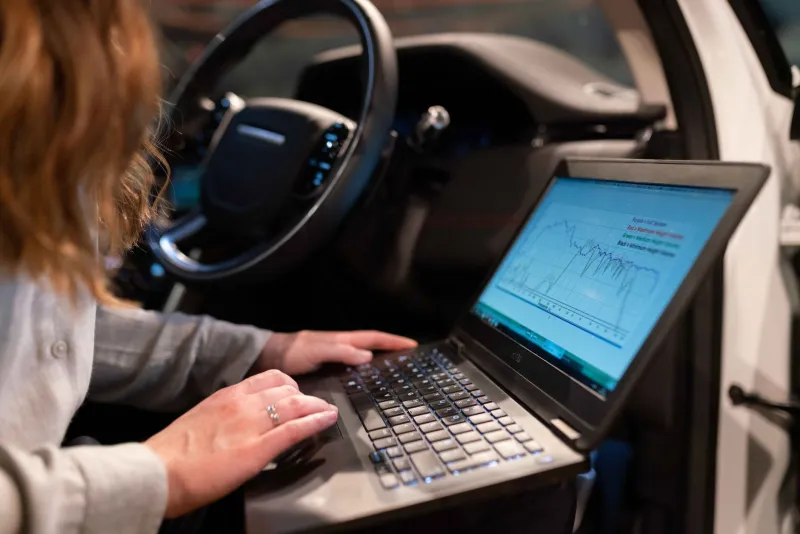
But AI-assisted tuning platforms are starting to compress that process dramatically. Companies like Cobb Tuning — a name that's been in the space for years — have evolved their Accessport ecosystem to include increasingly sophisticated cloud-based tune libraries that adapt to user-reported data. Meanwhile, newer players like EcuTek and Tactrix have built platforms that allow professional calibrators to push remote tunes with real-time feedback loops, dramatically reducing the need for in-person dyno sessions.
The newest generation of these tools uses machine learning to analyze data logs from thousands of vehicles running similar configurations and generate baseline calibrations that are significantly more refined than anything a single tuner could produce manually from scratch. Think of it as crowdsourced calibration intelligence — the collective experience of a thousand dyno pulls, distilled into a starting point that's already 80% of the way to optimal.
For the end user, this means faster turnaround, lower cost, and — in many cases — results that rival what you'd get from a full in-person session. It's not magic, and it's not replacing elite-level tuners for high-horsepower builds. But for the enthusiast running a stage-one or stage-two setup on a popular platform? The software is getting genuinely good.
OTA Updates: When the Factory Becomes the Tuner
Perhaps the most disruptive force in this space isn't a startup at all — it's the manufacturers themselves. Tesla normalized the concept of over-the-air performance updates years ago, but in 2024, the practice has migrated aggressively into the traditional performance car segment.
GM's performance division has used OTA updates to push recalibrated transmission shift logic and throttle mapping to Corvette owners. Ford has leveraged the same capability on the Mustang Mach-E GT and, more interestingly, on the Mustang Dark Horse, where software updates have refined track mode behavior based on feedback from actual owners. Dodge, in the twilight of its Hellcat era, pushed a final OTA update to last-edition Challenger and Charger owners that unlocked revised torque management profiles — essentially a goodbye gift from the factory tuners.
For the owner, this is extraordinary. Your car gets better while sitting in the driveway. No shop visit, no downtime, no cost. The catch, of course, is that you're entirely at the mercy of what the manufacturer decides to give you. They can take things away just as easily as they add them — and in some cases, they have, rolling back performance parameters following regulatory pressure or liability concerns.
Third-Party Software and the Warranty Question
Here's where things get genuinely complicated, and it's worth being straight about it: most third-party software modifications — tunes, ECU flashes, piggyback controllers — will void at least a portion of your powertrain warranty. The Magnuson-Moss Warranty Act provides some consumer protection, requiring dealers to prove a modification caused a specific failure before denying a claim. But in practice, if you're running an aftermarket tune and your transmission grenades, you're likely on your own.
The response from the software tuning industry has been interesting. Several platforms — including Cobb's Accessport — allow users to restore the factory calibration quickly before a dealer visit. It's a gray area that everyone in the industry acknowledges but nobody discusses too loudly.
For newer vehicles with more sophisticated ECU security, the picture is even murkier. Ford's latest-generation Coyote and the twin-turbo EcoBoost V6 in the Bronco Raptor use encrypted ECU architectures that have slowed the aftermarket considerably. The community is working around it — they always do — but the timeline is longer and the solutions are more expensive than they used to be.
Which Vehicles Are Winning the Software Revolution
Not every platform benefits equally from what's happening right now. The vehicles seeing the most dramatic software-driven gains tend to share a few characteristics: they're turbocharged, they have modern drive-by-wire throttle systems, and they have active communities generating large pools of data log information.
The Ford F-150 with the 3.5-liter EcoBoost is arguably the poster child for software performance gains in the truck segment. A quality tune on a stock engine yields 40 to 60 horsepower and meaningful torque improvements — transforming what's already a capable truck into something that'll genuinely humble sports cars at a stoplight. The EcoBoost Mustang tells a similar story. The Subaru WRX and the Volkswagen GTI/Golf R family have deep tuning ecosystems built around software that's been refined for years.
On the luxury side, BMW's N55 and B58 turbocharged inline-sixes have become favorites for software tuners. The B58 in particular — found in the Supra, the M240i, and the X3 M40i — responds to software optimization so dramatically that it's become something of a community joke. A properly tuned B58 produces numbers that BMW's own M division has to take seriously.
The Bottom Line on Digital Performance
The performance tuning world is in a genuinely exciting transition. The old guard — skilled calibrators with decades of platform-specific experience — isn't going anywhere. Complex, high-horsepower builds will always need human expertise. But the democratization of performance software means that more enthusiasts than ever can access meaningful gains without a massive investment of time or money.
If you're running a popular turbocharged platform and you haven't explored what's available in the software space, you're leaving real performance on the table. The tools are better, the data is deeper, and in 2024, some of the fastest cars on the street got that way without a single wrench turning.